Established by Peers to implement the recommendations of the House of Lords Select Committee on the Social and Economic Impact of the Gambling Industry's report into gambling harm.
Peers for Gambling Reform is delighted that the Government has appointed the Office for Health Improvement and Disparities (OHID) as the lead commissioning body under the statutory levy. PGR has long maintained that OHID would be the most appropriate body for this role.
This announcement provides much-needed certainty regarding the independence of funding for prevention. We have consistently called for independent oversight and a stronger public health response to gambling-related harm, and we now look forward to working with the Government to ensure the Statutory Levy is implemented effectively, with a smooth transition between the old voluntary system and the new.
While we welcome the steps taken to deliver this pivotal proposal, we now implore the Government to press ahead with other vital measures outlined in the 2023 White Paper – including the creation of an ombudsman to ensure those harmed by gambling have a clear route to redress – and continue to go further by addressing gambling advertising, which was notably missing from the previous White Paper.
The long-awaited introduction of this Statutory Levy is an important step towards the gambling industry paying for the harm it causes.
Along with others, Peers for Gambling Reform has been calling for a mandatory levy on the industry for many years. Gambling can wreak devastation on people’s lives and must be dealt with as a public health issue.
The gambling industry has for far too long avoided paying the money it should have done, and it is a damning inditement of the sector that their failure to pay adequately on a voluntary basis has necessitated the levy becoming a statutory obligation.
The money raised by this levy will go some way towards paying for gambling treatment, research and harm prevention but levels of payment must be reviewed over time to ensure adequate funding. I look forward to working with the government on the implementation of this levy which is so urgently needed.
National Sports Commentator Clive Tyldesley and former England Women’s Footballer Gilly Flaherty join Parliamentarians and over 250 people at Summit in Westminster to call for urgent reform to gambling advertising
New polling by Survation shows 78% of UK adults believe under 18s shouldn’t be exposed to gambling advertising, with over half supporting a complete ban on gambling advertising, sponsorship and promotion.
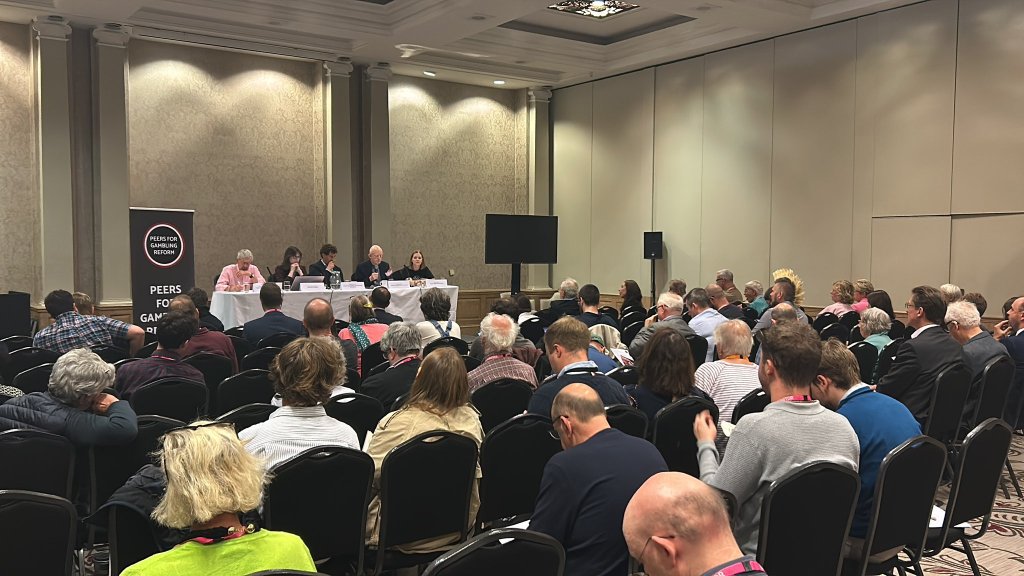
Today, Mark Palios, Former Football Association Chief Executive, and Guy Parker, Chief Executive of the Advertising Standards Authority and the Gambling Commission, will be joined by over 250 people including cross-party Parliamentarians, leading sporting figures and charities, in Westminster, to call for bold and significant reforms to gambling advertising.
The Gambling Advertising Reform Summit, organised by Peers for Gambling Reform, will underline the devastating impact the £1.5bn of advertising spend by gambling companies each year.
Alongside the Summit, new polling released today by Survation has shown that:
78% of people believe nobody under the age of 18 should be exposed to gambling advertising
67% of people believe gambling presents a danger to family life
65% of people think the gambling industry cannot be trusted to make gambling safer without government action
54% of people believe the Gambling Commission has failed to properly regulate the gambling industry
51% of people think that all gambling advertising, promotion and sponsorship should be banned
Background
In 2023, the Department for Digital, Culture, Media and Sport (DCMS) published a white paper that set out the- then government’s plan for the reform of gambling regulation following the review of the Gambling Act 2005. The major omission in the white paper was reform to gambling advertising, where proposals fell significantly short of what was required to deal with the harm the proliferation of gambling advertising has led to.
In a December 2023 report, the Culture, Media and Sport Committee said there was an “urgent need to better understand the effects of gambling advertising on the risk of harm”.
The Labour Party manifesto included a commitment to reduce gambling-related harm. This would involve reforming gambling regulation, strengthening protections, and working with the industry on how to ensure responsible gambling. In August 2024, in response to a parliamentary question on what plans it had to reduce gambling advertising, the government said it would “consider the best available evidence” to inform decisions on how to fulfil its manifesto commitment.
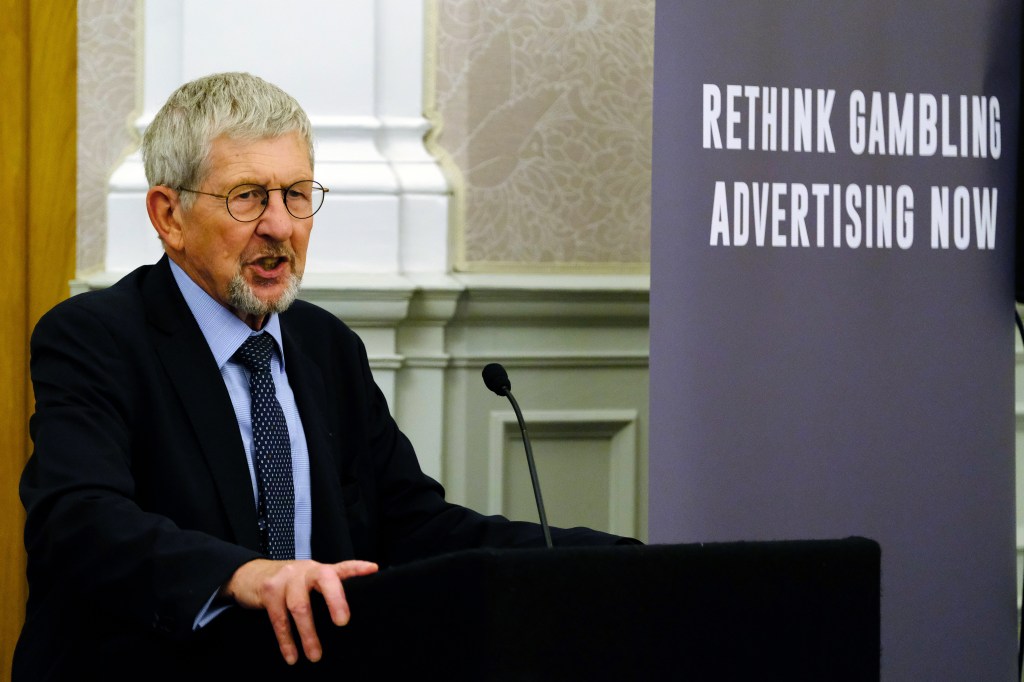
Lord Foster of Bath, Chair of Peers for Gambling Reform Group said
“Reforming gambling advertising was the major omission from the previous Government’s Gambling White Paper. Given the now established link between gambling advertising and gambling harm, Peers for Gambling Reform urge the new Government to urgently rethink the regulation of gambling advertising, and I look forward to discussing this in detail at this important Summit.”
Clive Tyldesley, Broadcaster and Sports Commentator said:
“I am increasingly uncomfortable with the relationship between football and gambling. I stepped down from a position commentating on games for TalkSport because I was required to read live odds during matches, and I just didn’t think I should be promoting betting. I want to encourage people involved in sport to try to learn more about gambling harm and the impact of gambling advertising before recording another commercial or renewing an ambassadorial role.”
Prof Henrietta Bowden-Jones OBE, National Clinical Advisor on Gambling Harms said:
“Over the last decade we have witnessed a proliferation of gambling advertising which has facilitated the normalisation of gambling. I am particularly concerned by the amount of gambling adverts present in football. We must protect future generations from being exposed to gambling ads when watching sport, society must become accountable for the environment lived in by future generations.”
Noted as ‘exemplary in all respects’ in the independent assessment of its methodology, the Gambling Commission’s Gambling Survey for Great Britain (GSGB) Annual Report published today illuminates the grim reality of the prevalence of gambling harms in Great Britain.
The high level of harm identified highlights the need for the urgent implementation of the measures outlined in the Gambling White Paper, such as the statutory levy on gambling operators to ensure that vital treatment and prevention services are appropriately funded.
The scale of the harm also illustrates the need to address issues surprisingly not covered in the White Paper with, not least, restrictions on gambling advertising.
Peers for Gambling Reform will continue to work with the Government and the Gambling Commission to strengthen harm reduction efforts and ensure those at risk are safeguarded from harm.”
Peers for Gambling Reform broadly welcomes the new measures introduced by the Gambling Commission to improve consumer choice and safety. We especially welcome measures to further restrict the speed and intensity of online gambling.
We regret – given the weight of evidence supporting further action – that little is proposed to tighten restrictions on gambling, advertising, marketing and sports sponsorship.
The proposal for an opt-in system for direct marketing is a step in the right direction although a complete ban would have been preferable.
Peers for Gambling Reform are also pleased to see the introduction of financial vulnerability assessments and the commencement of a financial risk assessment pilot.
We are concerned however by the proposed thresholds for light-touch assessments, which are simply too high to enable effective player protections.
The Gambling Commission should also ensure that the exact thresholds for financial risk assessments derived from the findings of the pilot are determined independently of the industry and are low enough to ensure individuals are protected from harm.
We would also note that it is essential that these thresholds are standardised and independently reviewed.
Lord Foster, Chair of Peers for Gambling Reform said:
“Notwithstanding the delay in publication, where the government has failed to hold big gambling companies to account for far too long, and during which hundreds of gamblers have committed suicide, the proposals in the White Paper are an important step in the right direction.
We are now almost three years on from the publication of the House of Lords Select Committee’s Report. While, after extensive work and detailed lobbying by Peers for Gambling Reform, I am pleased to see the Government finally bringing forward many of the key reforms we proposed, I am particularly disappointed that nothing substantial has been included towards tackling the gambling adverts that bombard people through their phones, TVs and radios.
Nevertheless, the proposals in the White Paper are a positive start and I am pleased that at last they are being based on a recognition that gambling should be treated as a public health issue. We will continue to push Ministers to stop dithering and implement these measures now, before more lives are ruined.“
Peers for Gambling Reform (PGR) is pleased that the government has finally come forward with proposals which reflect many of the recommendations of the House of Lords Select Committee on the Economic and Social Impact of the Gambling Industry and the subsequent recommendations of PGR.
The House of Lords Select Committee published its report ‘Time for Action’ in July 2020. Almost three years later and following intense lobbying by PGR, which has pushed for implementation of the Select Committee recommendations, a milestone has today been achieved as the government has set out critical reforms to:
Implement a mandatory levy to ensure all gambling companies pay for research, prevention, education and the treatment of harms;
Apply affordability checks to reduce the likelihood of people gambling more than they can afford;
Strengthen regulation of on-line gambling to be more in line with the regulation of land-based gambling
Strengthen gamblers’ means of redress
Limit some of the marketing activities of gambling companies
Taken together these measures and others in the White Paper should lead to a significant reduction in gambling harm in the UK. Currently millions of people are harmed by gambling either directly (including almost 60,000 11-16 year olds) or indirectly every year. Tragically, over 400 people a year commit suicide because of gambling harms. The economic burden of harmful gambling is estimated to be £1.27bn yearly with 60% of online gambling industry profits coming from those experiencing, or those at risk of experiencing, gambling harms. Losses from online gambling are also greater in the most deprived areas – 20% of the poorest regions supply 25% of industry revenue. The reforms proposed by PGR have also been evaluated by the economic consultancy NERA and were found to be fiscally beneficial to the Exchequer.
Given the scale of harm and the time it has taken to come forward with these proposals, the government must swiftly move forward and implement these much-needed measures to bring our analogue legislation into the digital era. PGR will be working hard to ensure they do so. Nearly all of our recommendations can be dealt with in a matter of months by Ministers and the Gambling Commission using their existing powers.
Bishop of St Albans and Vice-Chair of Peers for Gambling Reform said:
“We have worked collaboratively with campaigners, parliamentarians, experts and academics to achieve this change and have full confidence that once these reforms are implemented, they will have a huge impact on protecting people from gambling related harm. For every day that real reform is delayed, gambling addiction across the country fuels homelessness, unemployment, imprisonment, family breakdown, depression, and, most seriously, suicide.”
Lord Butler of Brockwell, Vice Chair of Peers for Gambling Reform said:
“We urge the Government to continue this momentum in ensuring our legislative regime meets the demands of our digital age and to implement the welcome proposals set out in the White Paper today without further delay. Peers for Gambling Reform are not prohibitionists but are supportive of a responsible and safe gambling industry.”
Baroness Armstrong, Vice Chair of Peers for Gambling Reform said:
“After years of cross party campaigning I am thrilled that the Government has chosen to listen to expert voices and those who have been impacted by gambling harm. The Government today is doing the right thing by taking steps towards protecting our communities.”